AI and the Future of Accounting: What ACCA Students Need to Understand
Artificial intelligence (AI) is changing the way businesses manage their finances and handle accounting tasks. Activities such as recording transactions, processing invoices, preparing financial reports, and analyzing financial data can now be completed faster with the help of AI-powered tools. These technologies help reduce manual work, identify possible errors, and support better financial decisions. AI is also becoming useful in auditing, taxation, and financial planning. As more businesses adopt digital tools, the accounting profession is gradually changing, making it important for future accountants to understand how technology works and how it can be used responsibly.
For ACCA students, understanding AI is becoming an important part of preparing for a career in accounting and finance. Although technology can automate many routine tasks, strong accounting knowledge, critical thinking, and professional judgement remain essential. Students also need to develop digital skills and learn how to check AI-generated information before using it in their work. Understanding these changes can help students prepare for new workplace expectations and explore different career opportunities. Whether their goal is to become an auditor, financial accountant, tax professional, or management accountant, learning about AI can help them build relevant skills and prepare for the future of the accounting profession.
What Is Artificial Intelligence in Accounting?
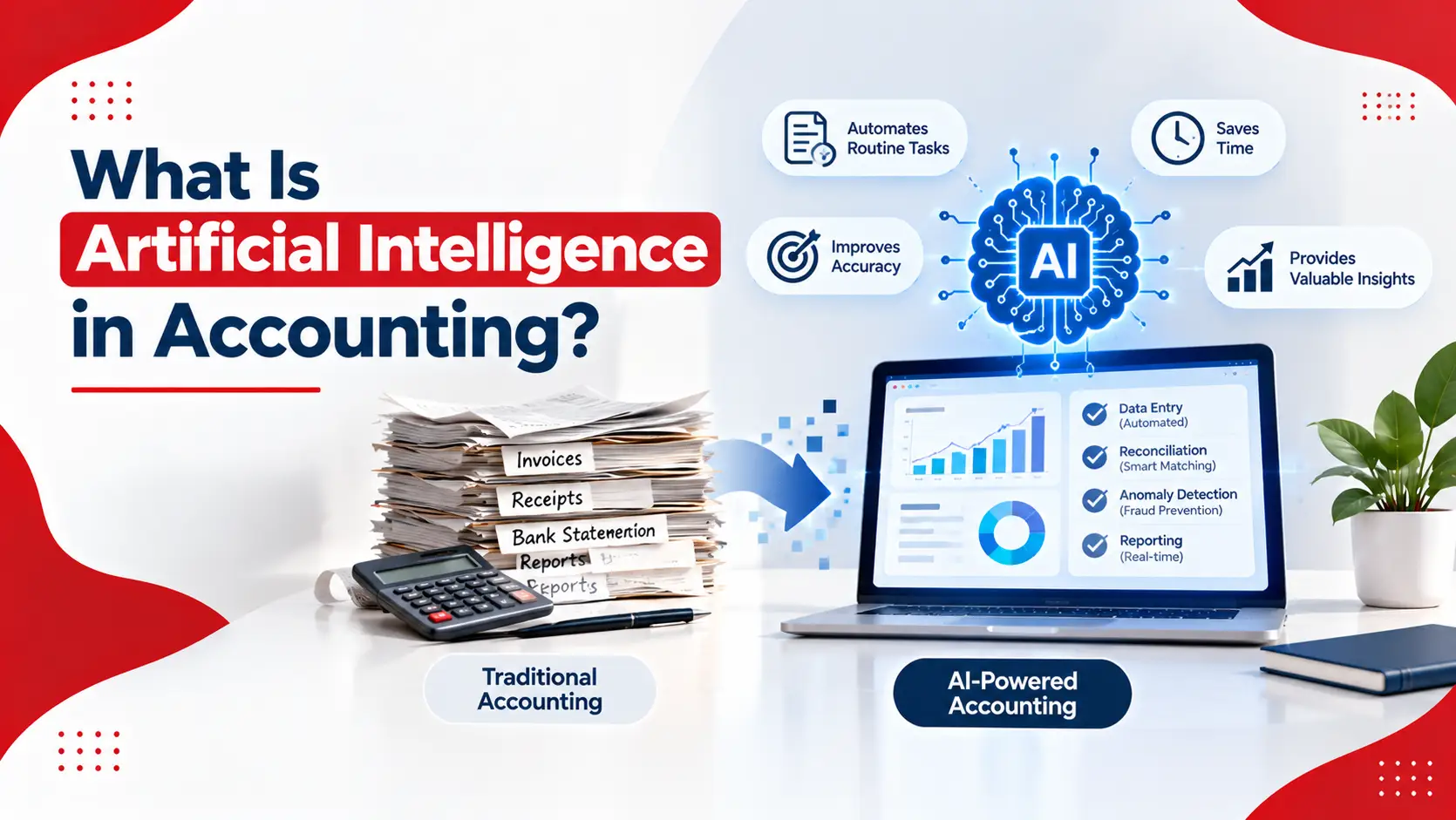
Artificial intelligence (AI) in accounting refers to the use of AI technologies such as Machine Learning, Intelligent Document Processing (OCR), and Business Intelligence (BI) and Data Analytics to process financial information, identify patterns, perform calculations, and support accounting tasks. It helps accountants manage financial records, analyse transactions, prepare reports, and complete repetitive activities more efficiently. For example, AI-powered accounting software can extract information from invoices, categorise business expenses, match bank transactions, and identify unusual entries that may require further review. These features can reduce manual work and help businesses manage their financial information more effectively.
AI uses different technologies to perform these tasks. Machine learning helps systems recognise patterns in financial data and make predictions based on available information. Natural language processing allows computers to understand and process text from documents, reports, and financial records. Generative AI tools can also help summarise financial information, explain accounting concepts, and prepare draft reports. However, AI is not always accurate and may produce incorrect results if the information provided is incomplete or misleading. Accountants must review the results, verify important details, and ensure that financial records follow the relevant accounting standards.
How Is AI Changing the Accounting Profession?
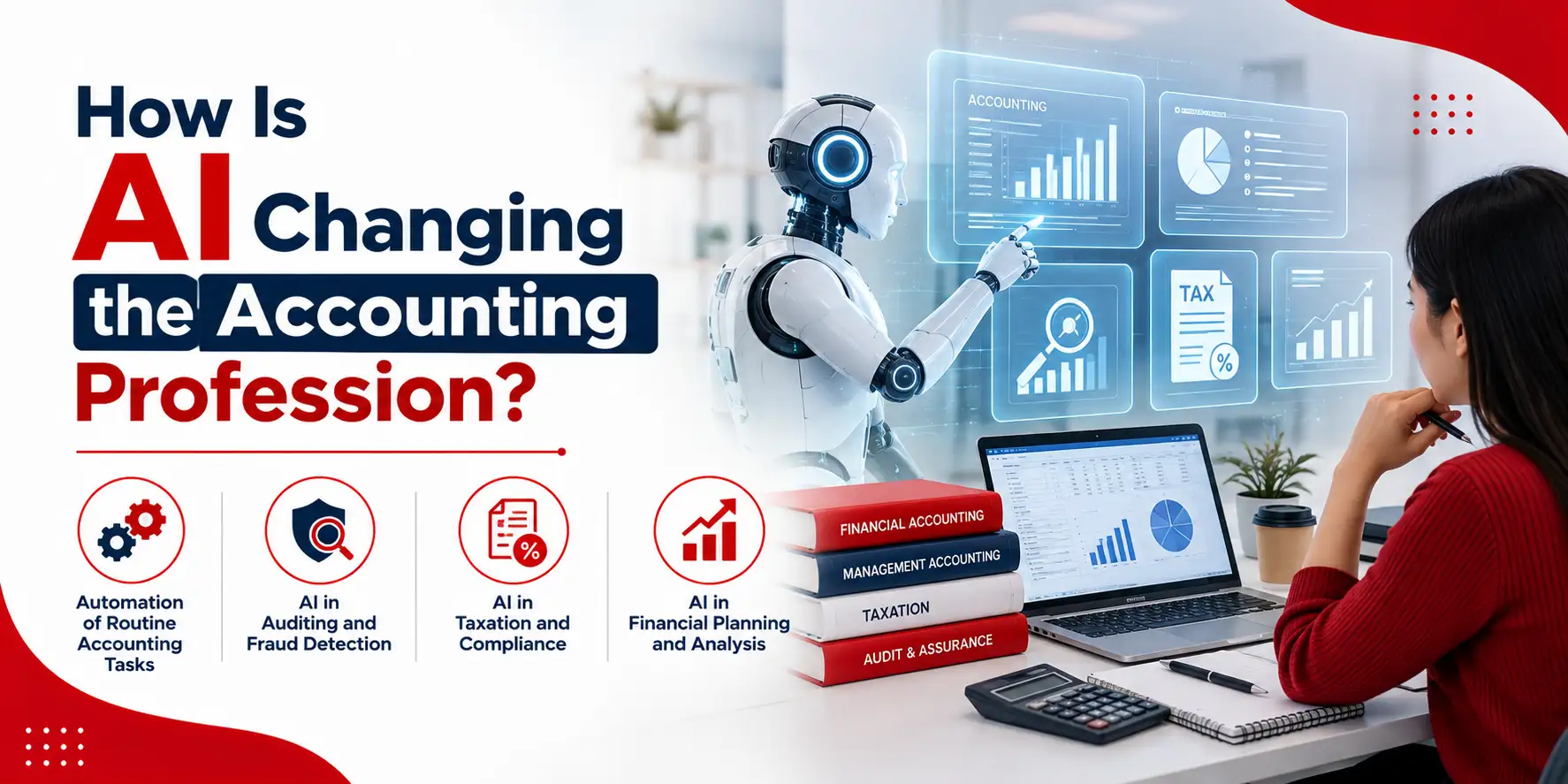
Artificial intelligence is changing how accounting professionals manage financial information and complete their daily tasks. Many businesses now use AI-powered tools to process transactions, analyze financial records, and prepare reports. These tools can reduce manual work and help accountants identify errors or unusual financial activities. AI is also supporting auditing, taxation, and financial planning by making data analysis faster and more efficient. However, accountants still need to review the results, apply professional judgement, and ensure that financial information is accurate.
1. Automation of Routine Accounting Tasks
Many accounting tasks, such as data entry, invoice processing, expense categorization, and bank reconciliation, can now be completed with automated tools. AI-powered software can extract information from invoices, record transaction details, and compare bank statements with accounting records. It can also identify missing information and highlight differences that require review. By reducing repetitive work, these tools allow accountants to spend more time checking financial records and handling complex accounting activities.
2. AI in Auditing and Fraud Detection
Examining large volumes of financial transactions can be time-consuming for auditors. AI-powered tools help speed up this process by identifying unusual patterns, duplicate payments, unexpected expenses, and transactions that differ from normal business activities. These findings help auditors identify potential risks and decide which areas need further investigation. However, unusual transactions do not automatically indicate fraud. Auditors must examine supporting documents, gather appropriate evidence, and apply professional judgement before reaching conclusions.
3. AI in Taxation and Compliance
Preparing tax returns involves organizing financial documents, checking calculations, and ensuring compliance with applicable tax laws. AI-powered tools can extract details from invoices and receipts, categorize expenses, and highlight missing information that may affect tax calculations. These features help tax professionals manage records more efficiently and identify possible errors. However, tax laws and regulations can change, so accountants must verify the information and ensure that tax returns follow the relevant legal requirements.
4. AI in Financial Planning and Analysis
Financial planning involves reviewing business performance, preparing budgets, and estimating future income and expenses. AI-powered tools can analyze historical data, identify financial trends, compare actual spending with budgets, and highlight unexpected changes in costs or revenue. These insights help businesses make informed decisions about investments and resource allocation. However, forecasts are not always accurate because market conditions and business needs can change. Accountants must review the results and consider relevant factors before recommending financial decisions.
Why Should ACCA Students Understand AI?
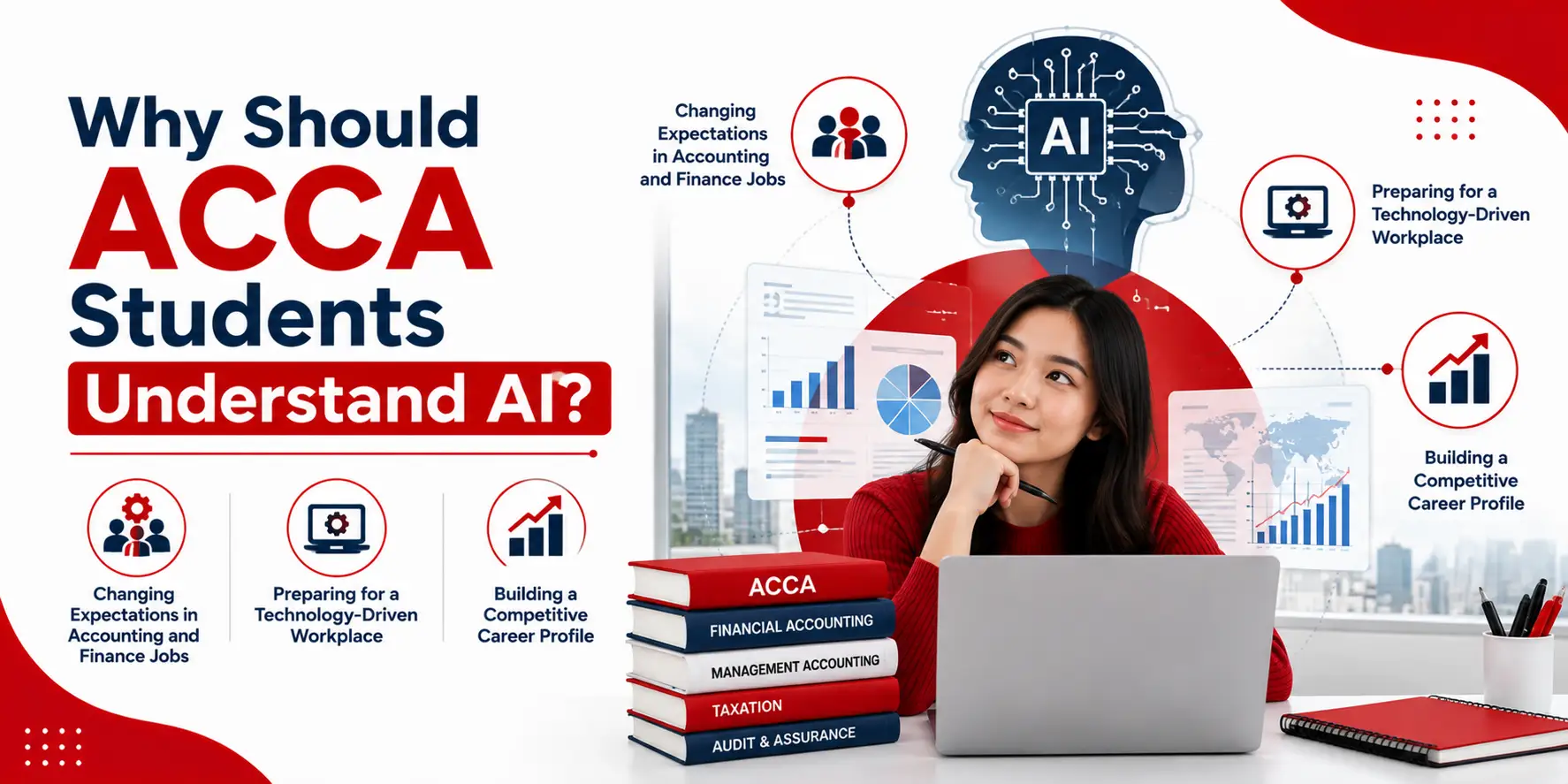
Artificial intelligence is becoming an important part of the accounting and finance industry. Businesses are using technology to manage financial records, analyze data, and complete routine tasks more efficiently. For ACCA students, understanding AI can help them prepare for changing workplace requirements and future career opportunities. It also helps them recognize how technology supports accounting work and why technical knowledge, analytical thinking, and digital skills remain important.
1. Changing Expectations in Accounting and Finance Jobs
Accounting professionals are expected to do more than record transactions and prepare financial statements. Employers increasingly need accountants who can analyze financial information, identify risks, and support business decisions. As AI automates some routine tasks, professionals may spend more time reviewing results and providing financial advice. ACCA students should understand these changing expectations and develop the technical and analytical skills needed to work effectively in modern accounting roles.
2. Preparing for a Technology-Driven Workplace
Modern workplaces increasingly depend on accounting software, digital financial systems, and data analysis tools. Understanding how these technologies work can help ACCA students adapt to different working environments. Students can start by learning spreadsheet applications, exploring accounting software, and practicing basic data analysis. Familiarity with AI tools can also help them understand how technology supports financial tasks. However, they must learn to verify the information produced by these systems instead of accepting every result as accurate.
3. Building a Competitive Career Profile
A strong career profile combines accounting knowledge with practical experience, digital skills, and effective communication. ACCA students can strengthen their profiles by learning how to analyze financial data, solve problems, and explain financial results clearly. Gaining internship experience and practicing with relevant accounting tools can also improve their understanding of workplace responsibilities. As technology continues to develop, students who combine professional accounting knowledge with the ability to use digital tools responsibly can better prepare themselves for changing career opportunities.
How Is AI Changing the ACCA Qualification and Learning Experience?
Artificial intelligence is changing how students learn accounting, prepare for exams, and understand financial concepts. ACCA students can use AI tools to simplify difficult topics, create practice questions, summarize study materials, and review their answers. Along with online classes and digital learning platforms, these tools offer more flexible ways to study. Students can learn at their own pace, revisit challenging topics, and spend more time practicing areas where they need improvement. Technology is also helping students understand how accounting tasks are performed in modern workplaces, where digital tools are becoming increasingly common.
However, using AI during ACCA preparation also requires care. AI-generated answers may contain errors, provide incomplete explanations, or fail to reflect the requirements of a particular exam question. Students should not depend entirely on these tools or use them as a replacement for official ACCA study materials, tutor guidance, and independent practice. Understanding accounting principles, applying knowledge to different situations, and developing professional judgement remain essential for exam success. By using AI responsibly alongside traditional study methods, ACCA students can improve their learning experience while building the knowledge and skills needed for a technology-driven accounting profession.
What ACCA Students Need to Understand About AI and the Future of Accounting
Artificial intelligence is changing how accounting and finance tasks are performed across different industries. From automating routine processes to supporting audits and financial analysis, AI is becoming a useful tool for accounting professionals. ACCA students need to understand how this technology works, where it can be useful, and what limitations it has. They should also learn how to combine digital skills with accounting knowledge, ethical awareness, and professional judgement to prepare for future career opportunities.
1. How AI Automates Accounting Processes
Many routine accounting tasks, such as data entry, invoice processing, transaction classification, and bank reconciliation, can now be automated using AI-powered tools. These systems help reduce manual work, save time, and improve efficiency. ACCA students should understand how automation works and why accountants must review automated results to maintain accuracy and keep financial records reliable.
2. Role of AI in Auditing and Fraud Detection
Analyzing large amounts of financial data can help auditors identify unusual transactions, possible errors, and suspicious patterns more efficiently. These findings allow professionals to focus on areas that may require further investigation. ACCA students should understand how AI supports audit procedures while recognizing that human review remains essential for assessing evidence and reaching appropriate conclusions.
3. Limitations of AI in Accounting
Despite its ability to process information quickly, AI does not always produce accurate or complete results. Incorrect data, system errors, and unclear instructions can affect the quality of its output. Future accountants must learn to verify AI-generated information, apply accounting principles, and use professional judgement before making financial decisions or preparing financial reports.
4. Impact of AI on Accounting Careers
The accounting profession is gradually shifting as technology takes over some repetitive tasks and supports financial data analysis. As a result, employers may place greater value on problem-solving, communication, digital skills, and financial decision-making. ACCA students should develop these abilities alongside their accounting knowledge to adapt to changing job requirements and prepare for future career opportunities.
5. Importance of AI in ACCA Studies
Digital tools can support ACCA students by explaining difficult concepts, summarizing study materials, and creating practice questions. These features can make revision more flexible and help students identify topics that need additional attention. However, students should check information against reliable ACCA resources and continue practicing questions independently to strengthen their understanding and prepare effectively for exams.
6. Ethical and Regulatory Challenges of AI
Using AI in accounting brings several concerns, including data privacy, confidentiality, bias, accuracy, and accountability. Financial professionals must protect sensitive information and check whether technology-generated results are reliable and appropriate. For ACCA students, understanding professional ethics and relevant regulations is important for using digital tools responsibly while maintaining trust in financial reporting and business decisions.
Why Choose Seekshya Academy?
Choosing the best academy for ACCA is very important, as it requires a clear understanding of accounting concepts, regular practice, and guidance throughout the qualification. Seekshya Academy supports students in building their knowledge and preparing for their ACCA exams through flexible learning options. Students can choose a study approach that fits their schedules and continue learning alongside college or work.
- Flexible Learning Options: Recorded classes allow students to study at their own pace and revisit lessons whenever needed. This can be helpful for working professionals, college students, and learners living outside Kathmandu.
- Support for Exam Preparation: Regular practice questions and mock exams help students understand exam formats, assess their preparation, and identify topics that need more attention.
- Learn Alongside Other Commitments: Flexible study options make it easier to balance ACCA preparation with work, college, and personal responsibilities without following a fixed classroom schedule.
- Build a Strong Accounting Foundation: Understanding accounting principles is essential for ACCA exams and future professional roles. With structured learning and consistent practice, students can strengthen their subject knowledge and prepare for the changing demands of the accounting profession.
Recommendation blogs : AI in Banking in Nepal: Benefits, Challenges and Future
Conclusion
Artificial intelligence is changing the accounting profession by automating routine tasks, supporting audits, improving financial analysis, and helping businesses make informed decisions. While these changes can make accounting work more efficient, technology cannot replace the need for accounting knowledge, professional judgement, and ethical decision-making. For ACCA students, understanding AI is becoming an important part of preparing for a career in accounting and finance. Learning how to use digital tools responsibly can help students adapt to new workplace requirements and understand how accounting practices are evolving.
At the same time, students should not depend entirely on AI for learning or professional tasks. Building a strong understanding of accounting principles, practicing exam questions, and checking information carefully remain essential for long-term success. Combining ACCA knowledge with digital skills, analytical thinking, and problem-solving abilities can help students prepare for future career opportunities. With the right learning approach, students can develop the skills needed to work confidently in a technology-driven accounting industry. To learn more about accounting, ACCA preparation, and other useful topics, do check out our other blogs too.
Frequently Asked Questions
1. Can AI replace ACCA in the future?
No, AI cannot replace the ACCA qualification. ACCA provides professional knowledge in accounting, auditing, taxation, finance, and business management. Although AI can support many accounting tasks, professionals still need to understand financial information, apply ethical principles, and make important decisions. AI is more likely to change how ACCA professionals work than replace the qualification itself.
2. Is there a future in accounting with AI?
Yes, accounting still has a strong future with the growth of AI. Businesses will continue to need professionals who can manage financial information, prepare reports, assess risks, and support business decisions. While technology may automate routine tasks, accountants with digital skills, analytical thinking, and professional knowledge will remain important in the industry.
3. Will AI replace accountants in 2026?
AI is not expected to replace accountants completely in 2026. Instead, it is changing how they perform their daily responsibilities. Tasks such as data entry, invoice processing, and basic financial analysis can be automated. However, auditing, financial planning, problem-solving, and professional judgement still require human involvement and expertise.
4. Which AI is good for accounting students?
Accounting students can explore tools such as ChatGPT, Microsoft Copilot, and Google Gemini to support their studies. These tools can explain difficult accounting concepts, summarize notes, and generate practice questions. However, students should always verify the information using official ACCA study materials and avoid depending entirely on AI-generated answers.
5. How will AI change the accounting industry?
AI will make many accounting processes faster by automating repetitive tasks and helping professionals analyze large amounts of financial data. It can also support auditing, fraud detection, taxation, and financial planning. As these tools become more common, accountants will need stronger digital skills, analytical thinking, and professional judgement to handle changing responsibilities.