ACCA Specialization Guide: Risk, Audit, Tax or Finance
The Association of Chartered Certified Accountants (ACCA) is one of the most recognized accounting qualifications in the world. It is accepted in many countries and offers strong career opportunities in areas like finance, auditing, consulting, and business management. Students who complete ACCA gain both technical knowledge and practical skills, which helps them work in different industries. As you progress in your ACCA journey, one key stage is choosing your specialization, which plays an important role in shaping your career path. At this stage, many students feel unsure about what to choose. Risk, Audit, Tax, and Finance all sound valuable, and each offers good career options.
However, each field focuses on different types of work and skills. Choosing the right specialization is important because it affects your future job role and growth. When you clearly understand what each option involves, it becomes easier to select the one that matches your interests and long-term goals.
What is ACCA?
The Association of Chartered Certified Accountants (ACCA) is a global professional accounting qualification recognized in over 180 countries. It is designed for students and professionals who want to build a career in accounting, finance, audit, taxation, and management. ACCA combines practical skills with theoretical knowledge, giving students the ability to work in different industries and organizations, from multinational companies to local businesses.
ACCA has a structured pathway, starting with Applied Knowledge and Applied Skills levels, and ending with the Strategic Professional level. Students can also choose specializations such as Risk, Audit, Tax, or Finance at the professional stage. The ACCA course is flexible, allowing students to study at their own pace and gain exemptions if they have prior relevant education. ACCA also emphasizes ethics and professionalism, preparing members to work effectively in real-world business environments.

Understanding ACCA Specializations
At the Professional level, the Association of Chartered Certified Accountants (ACCA) gives students the freedom to choose subjects based on their interests and future career plans. Flexibility is one of the key advantages of ACCA compared to many other accounting qualifications. This approach allows students to focus on what they are good at and what they enjoy learning. By choosing a specialization, students can develop deeper knowledge and practical skills in a specific field.
This not only improves confidence but also increases job opportunities after completing ACCA. Employers often prefer candidates who have strong expertise in one area, as it shows clear direction and professional focus in their career path. The four most popular specialization choices in the Association of Chartered Certified Accountants are:
1. Risk and Performance Management
Risk and Performance Management focuses on how businesses handle uncertainty and improve their overall performance. In this specialization, students learn how to identify risks, control financial and operational issues, and support better decision-making. It is more about analysis and understanding business situations. This option is suitable for students who enjoy problem-solving and thinking logically. Career opportunities include roles like risk analyst, business consultant, and internal auditor, and demand is growing as companies focus more on risk control.
2. Audit and Assurance
Audit and Assurance is one of the most traditional and respected areas in accounting. It focuses on checking financial records and making sure they are accurate and follow rules and regulations. Students learn how to review financial statements, ensure compliance, and detect errors or fraud. This field is suitable for those who prefer structured work and clear processes. Career roles include external auditor, internal auditor, and compliance officer. Many global firms, including large audit companies, offer strong career opportunities in this field.
3. Taxation
Taxation is a practical and highly demanded field in accounting. In this specialization, students study tax laws, regulations, and planning for both individuals and companies. It requires attention to detail and regular updates, as tax rules often change. Students also learn about international taxation and how businesses manage taxes globally. This field is ideal for those who are comfortable with rules, calculations, and legal frameworks. Career roles include tax consultant, tax advisor, and corporate tax manager in firms and organizations.
4. Financial Management
Financial Management focuses on managing money, investments, and business growth. In this specialization, students learn about financial planning, investment decisions, and corporate finance strategies. It connects accounting knowledge with real business situations and decision-making. This field is suitable for students who are interested in business, finance, and leadership roles. Career opportunities include financial analyst, finance manager, and investment-related roles. It is considered a dynamic field because it plays a key role in business success and long-term growth.
Global Career Opportunities After ACCA
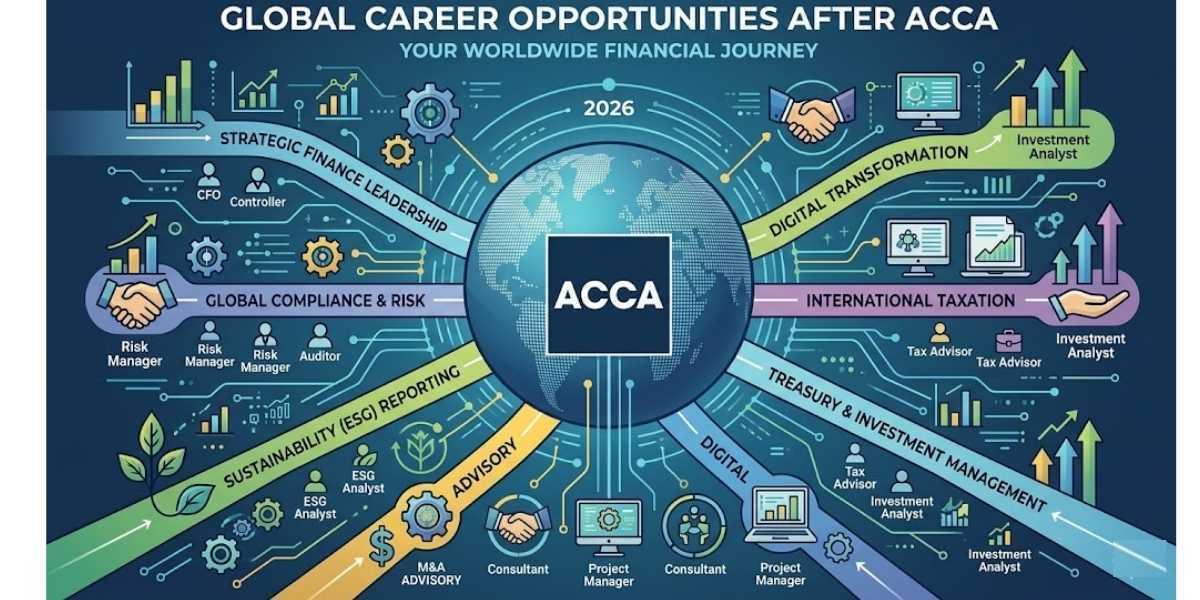
ACCA opens many international career opportunities in fields like finance, accounting, audit, tax, and consulting. Qualified ACCA professionals are highly valued by companies in countries such as the UK, Middle East, Australia, and Nepal. Employers prefer ACCA members because they have strong knowledge of accounting, finance, business practices, and professional ethics. This makes them capable of handling complex business challenges and contributing effectively to organizational growth. ACCA also provides a globally recognized qualification, which allows professionals to work in different industries and countries without limitations.
Career roles for ACCA members vary depending on the specialization chosen. Those in risk and performance management can become risk analysts or business consultants, auditors can work in internal or external audit positions. Tax specialists may take up roles as tax advisors or corporate tax managers, and finance professionals can work as financial analysts, finance managers, or investment consultants. Over time, ACCA members can also move into leadership and management positions. The qualification not only supports local career growth but also provides opportunities to work internationally, giving professionals the flexibility to choose roles that match their skills, interests, and long-term career goals.
Professional Models in ACCA
In ACCA, understanding the different professional models helps students choose the right specialization and apply their knowledge effectively in real-world business scenarios. The main models include Risk, Audit, Tax, and Finance, each focusing on a specific area of business operations. These models provide practical frameworks for analyzing problems, making decisions, and managing responsibilities in a professional environment:
1. Audit Risk Model
The Audit Risk Model helps auditors identify and manage risks in financial statements. Understanding this model allows auditors to plan their work effectively and ensures accuracy in financial reporting. It breaks down audit risk into three main components:
- Inherent Risk: The chance that a financial statement or transaction could be misstated due to its nature, before considering any controls.
- Control Risk: The risk that a misstatement will not be prevented or detected by a company’s internal controls.
- Detection Risk: The risk that audit procedures fail to detect a material misstatement.
2. Risk Model
The Risk Model focuses on identifying and managing risks that could affect business operations or strategy. This model helps businesses plan, mitigate threats, and make informed decisions. Key components include:
- Strategic Risk: Risks affecting long-term goals or plans due to market changes or competition.
- Operational Risk: Risks from processes, systems, or internal errors that can disrupt daily operations.
- Financial Risk: Risks related to poor financial management, investments, or cash flow.
- Compliance Risk: Risks of penalties or loss due to failing to follow laws or regulations.
3. Tax Model
The Tax Model focuses on applying tax laws and planning for individuals and businesses. This model ensures legal compliance and helps businesses optimize their tax strategies. Key components include:
- Corporate Tax: Planning and calculating taxes for companies to stay compliant and efficient.
- Personal Tax: Managing taxes for individuals, including deductions and allowances.
- Indirect Tax: Handling VAT, GST, or customs duties.
- International Tax: Managing cross-border taxation, treaties, and transfer pricing.
4. Finance Model
The Finance Model deals with managing money, investments, and corporate financial strategy. This model helps businesses make smart financial decisions and achieve long-term growth. Key components include:
- Investment Decisions: Evaluating opportunities to invest funds for maximum returns with minimum risk.
- Financial Planning: Creating budgets, forecasts, and strategies to support sustainable operations.
- Corporate Finance: Managing capital structure, funding options, and strategic growth.
- Risk and Return Analysis: Balancing potential gains with associated financial risks.
Why Choose Seekshya Academy for ACCA Specialization Guide
Seekshya Academy is a trusted institute for ACCA students in Nepal. It provides expert guidance to help students choose the right specialization. The academy focuses on clear understanding, practical learning, and career-oriented support. Here’s why students prefer Seekshya Academy:
- Experienced Faculty: Teachers have years of ACCA teaching experience and provide simple, easy-to-understand explanations for all subjects and specializations.
- Specialization Guidance: Students receive personalized advice on choosing the right ACCA specialization based on their skills, interests, and career goals.
- Practical Learning: Classes include real-world examples, case studies, and practical exercises to strengthen understanding and application of concepts.
- Exam Preparation Support: Regular mock exams, practice sessions, and doubt-clearing classes help students stay confident and fully prepared for ACCA exams.
- Career-Focused Approach: Seekshya Academy also guides students on career opportunities and industry expectations to help plan a successful professional journey.
Conclusion
Choosing a specialization in the Association of Chartered Certified Accountants (ACCA) is an important step that can shape your future career. Options like Risk, Audit, Tax, and Finance all offer strong career opportunities in different fields. However, there is no single best choice for everyone. The right option depends on what you enjoy studying, your strengths, and the type of job you want in the future.
It is always a good idea to take some time and choose the best ACCA academy in Nepal before making your decision. Try to understand what each specialization involves and think about which one matches your interests. You can also take guidance from teachers or mentors to make a better choice. For more tips, insights, and detailed guides on ACCA and accounting careers, don’t forget to check out our other blogs to help you plan your journey successfully.
Recommended Blog:- What is the Pass Rate for ACCA Exams?
- Top 5 ACCA Revision Tips For Students Studying ACCA in Nepal
- What to do After ACCA: Next Steps After ACCA
FAQS for ACCA Specialization Guide
1. What is the hardest module in ACCA?
Many students feel that papers in the Strategic Professional level are the hardest, especially Advanced Financial Management (AFM) and Advanced Audit and Assurance (AAA). These subjects need strong understanding and good exam techniques. However, difficulty is different for everyone. If you prepare well and understand the concepts clearly, even these papers can feel manageable.
2. Is ACCA closing in 2026?
No, ACCA is not closing in 2026. The Association of Chartered Certified Accountants is a well-established global body and continues to grow every year. It keeps updating its syllabus to match current industry needs. This makes ACCA a reliable and future-focused qualification for students planning an international career in accounting and finance.
3. Can I finish ACCA in 2 years?
Yes, it is possible to complete ACCA in around 2 years if you stay focused and consistent. Students who have exemptions can finish faster. You need to pass exams regularly and follow a proper study routine. However, many students take around 2.5 to 3 years depending on their pace, understanding, and other commitments.
4. Which is toughest, CA or ACCA?
CA and ACCA are both challenging, but in different ways. CA is often more strict and exam-focused, especially in countries like Nepal and India. ACCA is more flexible and allows students to plan exams at their own pace. The difficulty depends on how you study and what style suits you better.
5. What is the easiest skill level in ACCA?
The Applied Skills level is usually easier if you have a good base from the Applied Knowledge level. Some subjects like Corporate and Business Law (LW) are considered simpler because they are more theory-based. However, papers like Financial Reporting (FR) and Performance Management (PM) can feel harder as they involve more technical understanding.